Environmental & CQA
CQA for Landfill & Lining Projects: What the EPA Expects
In brief CQA for landfill and containment lining is independent verification that liners were built as designed — material conformance, monitored clay liner placement, destructive and non-destructive geomembrane seam testing, electrical leak location surveys, and a final validation report that EPA-licensed facilities in Ireland are expected to hold.
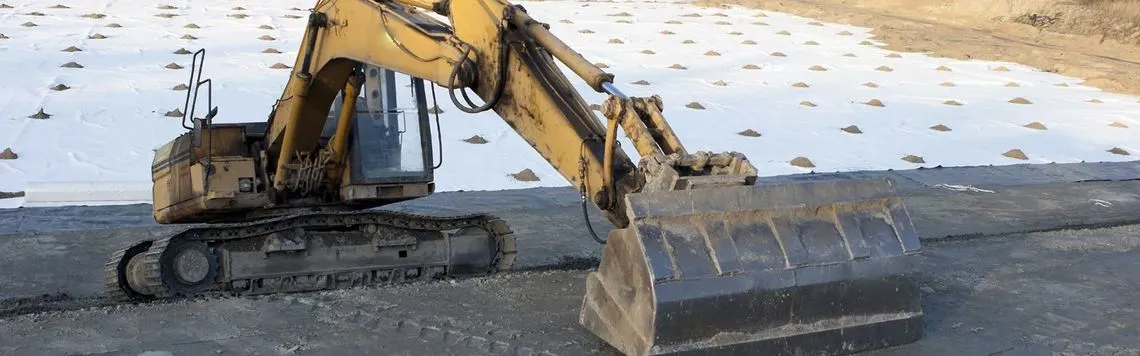
A containment liner is a one-shot system. Once waste, leachate or effluent sits on top of it, every construction defect becomes permanent infrastructure — invisible, inaccessible and, if it leaks, a licence problem with a groundwater consequence. That is why construction quality assurance on lining projects is not paperwork theatre: it is the only moment in the asset’s life when quality can be verified rather than assumed.
QC is not QA — the distinction regulators care about
The installer’s own quality control (QC) — trial welds, pressure tests, wedge-welder logs — is necessary and expected. Construction quality assurance is different in kind: independent monitoring and testing, commissioned by the operator or their engineer, producing a record that does not depend on the party being paid to finish quickly.
For EPA-licensed facilities in Ireland — landfills, leachate lagoons, industrial containment under industrial emissions licences — that independent record is what demonstrates the containment system was built as designed. When an auditor, a licence review or an incident investigation asks “how do you know the liner is sound?”, the CQA file is the answer. There is no retrofitting it.
The full evidence chain
A credible CQA programme runs the whole containment system, not just the black plastic:
1. Material conformance
Delivered materials verified against specification before they go in the works: geomembrane rolls (thickness, properties, certificates against the specified resin and grade), geotextiles, drainage aggregates, and clay sources.
2. Engineered clay liners
Where the design includes compacted clay:
- Suitability testing — classification, moisture-condition and compaction characteristics of the borrow material.
- Placement control — layer thickness, moisture and density testing as lifts are compacted.
- Permeability verification — laboratory triaxial permeability testing confirming the liner achieves its specified hydraulic conductivity.
3. Geomembrane installation and seams
- Installation surveillance — panel layout, subgrade condition, weather windows, wrinkle management, repairs logged.
- Non-destructive seam testing — continuity testing of every seam by the appropriate method for the weld type.
- Destructive seam testing — sampled seams tested in shear and peel against acceptance criteria, at the frequency the CQA plan sets. Shear pulls the joint apart along its axis; peel attacks the fusion interface itself — together they expose both weak welding and contaminated interfaces.
4. Electrical leak location — the step that finds what everything else missed
Most liner damage does not happen during welding. It happens afterwards, when drainage stone and protection layers are placed by machines over a finished liner. Electrical leak location surveys exploit the fact that an intact geomembrane is an electrical insulator: current only crosses where there is a hole.
Run it twice and the system is genuinely verified: an exposed survey after installation catches installation damage; a dipole survey after cover placement catches the damage the stone did. Repairs found at this stage cost a patch and a re-test. The same hole found by the leachate monitoring system costs an investigation.
5. The validation report
Everything above compiles into the final CQA validation report: test results, surveillance records, repair logs, as-built drawings, non-conformances and their closure. This document is the deliverable — the demonstration, years later, that the containment was built right.
What to look for in a CQA provider
- Independence from the installer — structurally, not just nominally.
- Laboratory depth: clay permeability, soils classification and polymer seam testing need accredited laboratory capability, not just a site presence. Metlab’s testing operates under INAB accreditation to ISO/IEC 17025 (Reg. 398T).
- Field and lab under one roof — sample custody, turnaround and accountability all improve when the monitoring team and the testing laboratory answer to the same quality system.
- A CQA plan, before mobilisation — frequencies, acceptance criteria and hold points agreed in writing; ambiguity in the plan becomes argument in the works.
Metlab on containment projects
Metlab delivers the full containment evidence chain: CQA planning and site monitoring, soils and clay liner testing (including triaxial permeability), polymer seam destructive testing, electrical leak location surveys, and the final validation reporting — with materials testing heritage running back to the late 1990s and accredited systems behind every number. For operators, that means one accountable partner between the design intent and the buried reality.
Planning a cell, lagoon or containment upgrade? Involve the CQA provider before the design is tendered — the plan is cheaper than the argument.
Frequently asked questions
What is CQA on a lining project?
Construction quality assurance is independent, systematic monitoring and testing of lining construction — separate from the installer’s own quality control. It covers delivered material conformance, clay liner placement and permeability, geomembrane installation and seam testing, and protection and drainage layers, all compiled into a validation record the regulator and licensee can rely on.
When should electrical leak location surveys be done?
Ideally twice: an exposed-liner survey after installation, and a dipole survey after drainage stone or cover placement — because cover placement is when most liner damage actually occurs. A survey only after covering cannot distinguish installation damage from placement damage; two surveys close that gap while repair is still simple.
Who commissions the CQA — the contractor or the operator?
Normally the facility owner/operator or their engineer, precisely because CQA must be independent of the installer whose work it verifies. The CQA provider reports findings without commercial interest in the installation programme.