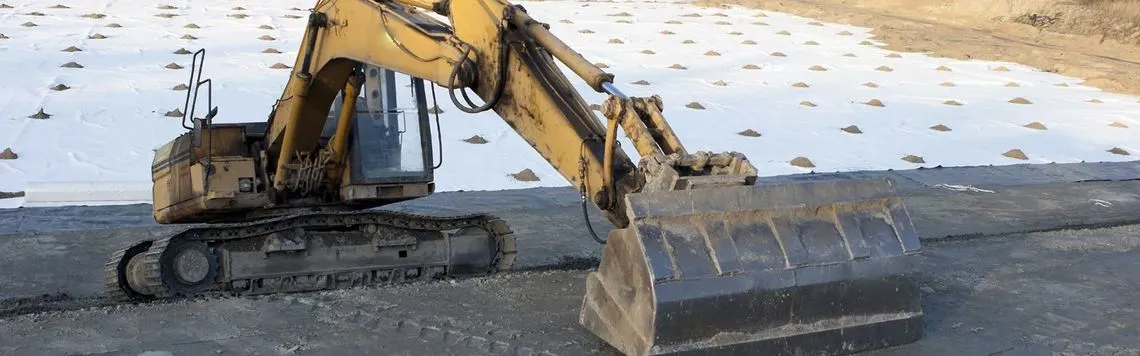
Construction materials testing (CMT) verifies that soils, aggregates and construction materials meet design assumptions — in the laboratory and on site. Metlab established its CMT division in the late 1990s and now delivers full lab and field programmes nationwide from Cork and Dublin.

Materials test specimens prepared in the laboratory
Overview
Every pavement design, foundation and engineered fill carries assumptions about the ground: strength, compaction, moisture, gradation. CMT replaces those assumptions with measurements — before settlement, cracking or rework make the answers expensive.
Metlab provides sampling, laboratory testing and in-situ field testing as an integrated service, so earthworks contractors and resident engineers get one accountable chain from sample to certificate.
Laboratory testing
Particle size distribution
Grading of soils and aggregates
Compaction testing
Proctor / dry density–moisture relationships
Moisture condition value (MCV)
Suitability of cohesive fill
Atterberg limits
Plastic limit and liquid limit determination
Particle density & moisture content
Classification testing
Aggregate classification
Classification and grading of aggregates to specification
Triaxial permeability
Permeability of compacted clays and liners
Concrete testing
Compressive strength, slump and sampling — see Concrete Testing
Field testing
Nuclear density gauge testing
Rapid in-situ density and moisture measurement
Sand replacement density
Reference in-situ density method
California bearing ratio (CBR)
Subgrade strength for pavement design
Plate bearing tests
Bearing capacity for working platforms and foundations
Core cutter & shear vane
In-situ density and undrained shear strength
Rolling straight edge & deflectometer
Pavement surface regularity and stiffness
Rebar location
Cover surveys and reinforcement mapping
Dynamic Cone Penetrometer (DCP)
In-situ subgrade strength profiling
Standards & schemes
Work is examined against the designations your specification cites.
| Standard | What it covers |
|---|---|
| I.S. EN 1997 (Eurocode 7) context | Geotechnical design verification testing |
| BS 1377 / EN ISO 17892 series | Laboratory soils testing methods |
| TII specifications | Road and infrastructure earthworks compliance testing |
Why it matters
01
Compaction failures surface years later
Under-compacted fill performs until loading and time find it. Density and MCV testing during placement is the only economical moment to catch it.
02
Integrated lab + field = faster answers
Because Metlab runs both the field crews and the laboratory, results move without hand-offs — critical when an earthworks programme is waiting on a compaction result.
03
Independence the resident engineer can cite
Third-party results carry weight in compliance submissions and disputes that contractor self-certification cannot.
Common questions
Asked before every engagement.
Something more specific? A specialist will answer it directly.
Ask usDo you provide testing to TII / local authority road specifications?
Yes — our field and laboratory testing supports earthworks and pavement compliance on national and regional road schemes, including CBR, density, MCV and material classification to the applicable clauses.
How quickly are field density results available?
Nuclear density gauge readings are available on the day, allowing placement to continue or be corrected immediately; confirmatory laboratory results follow under our quality system.
Can you resource a full-time site laboratory?
For major earthworks and infrastructure projects we provide embedded technicians and site testing arrangements scaled to the programme — contact us with the specification and expected volumes.
Testing · Inspection · Certification
Need construction materials testing?
Send the specification or describe the asset — a specialist replies with method, price and turnaround.