Pressure Systems
Pressure Vessel Inspection Intervals in Ireland: Owner’s Guide
In brief In Ireland, pressure systems law sits in Part 10 and Schedule 12 of the Safety, Health and Welfare at Work (General Application) Regulations, inserted by S.I. No. 445 of 2012: pressure vessels of the classes listed in Schedule 12 must receive periodic thorough examination by a competent person, at intervals set by the Schedule, the manufacturer or the competent person’s written scheme. As a working convention, fired vessels are examined more frequently (around every 14 months) than unfired vessels such as air receivers (around every 26 months).
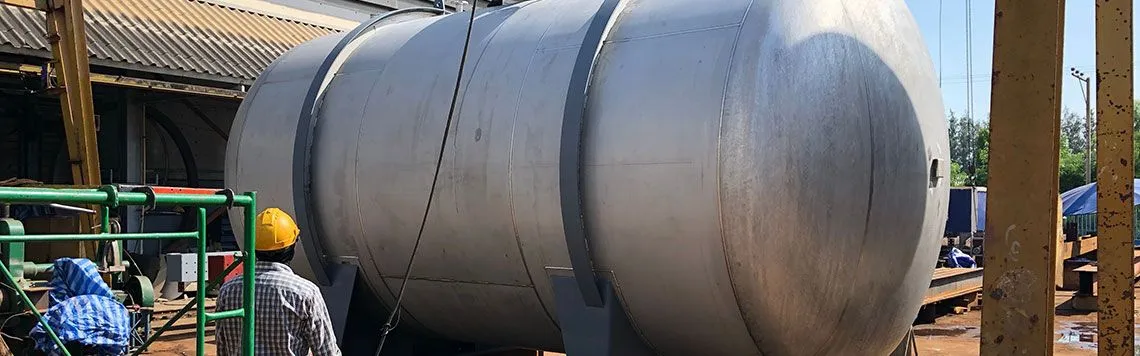
Almost every industrial facility in Ireland runs pressure equipment — air receivers behind the compressor house, steam boilers, heat exchangers, process vessels. Stored energy makes this equipment unforgiving: pressure vessel failures have killed people, which is why the law does not treat examination as best practice. It is a duty. Here is what the Irish regime actually requires, without the fog.
The law, located precisely
Ireland’s pressure systems requirements live in the Safety, Health and Welfare at Work (General Application) Regulations 2007, into which S.I. No. 445 of 2012 inserted a dedicated Part 10 (Pressure Systems) and Schedule 12. Together they set out requirements for the design, construction, safe operation, examination and testing of pressure equipment — and for keeping records of those examinations. The Health and Safety Authority publishes guidance on the Part 10 regime.
Three obligations matter most to an owner or user:
- Periodic thorough examination. Pressure vessels of a type or class specified in Schedule 12 must be examined by a competent person at least once in the period the Schedule specifies — unless a different period is properly set (the Regulations allow variation by the competent person under the prescribed mechanism, or specification in writing by the manufacturer).
- Competence. The examiner must meet the 2005 Act’s definition of a competent person: sufficient training, experience and knowledge appropriate to the task.
- Records. Reports of examinations must be kept and available.
What “thorough examination” involves
A thorough examination is not a walk-past with a torch. Depending on the vessel and its written scheme, it combines:
- Out-of-service examination — internal inspection where the vessel can be opened: shell, welds, nozzles, fittings and safety devices.
- In-service checks — safety valve condition and settings, pressure gauge calibration, corrosion and external condition.
- NDT where indicated — ultrasonic thickness surveys on suspect areas, crack detection on nozzles and welds, corrosion mapping where wall loss is suspected.
This is where an examination body with laboratory depth changes the outcome. An inspector without NDT capability can only report that something looks wrong; Metlab’s examiners quantify it — thickness, extent, rate — so the report ends in a decision rather than a further mobilisation.
Intervals: the working conventions
The governing documents are Schedule 12 and your vessel’s written scheme — but the long-established working conventions (reflected on our own examination programmes) are:
| Equipment class | Convention | Notes |
|---|---|---|
| Fired / self-generating (steam boilers) | ~ every 14 months | Higher duty, thermal stress, water-side corrosion |
| Unfired vessels (air receivers, process vessels) | ~ every 26 months | Subject to condition and scheme |
| New installations | Before first use | Plus after significant repair or modification |
Treat the table as orientation, not authority: the interval that binds you is the one in your scheme of examination. What the law will not forgive is drift — vessels quietly running months past due because no one owns the schedule. A tracked examination programme, with intervals per vessel and reminders ahead of due dates, is the cheapest compliance instrument there is.
The repair trap most owners miss
Examinations find defects; defects on pressure equipment get welded; and welded repair on pressure equipment is not ordinary welding. Under the Pressure Equipment Directive (2014/68/EU) regime, permanent joining procedures and personnel for category II–IV equipment must be approved by an appropriate third party. Repairing a vessel with an unapproved procedure converts a maintenance job into a conformity problem.
Metlab closes this loop domestically: as a Recognised Third-Party Organisation (RTPO) appointed by the State, we approve welding procedures and personnel for pressure equipment — so the same organisation that found and quantified the defect can approve the repair method that fixes it.
Across the border: PSSR in Northern Ireland and Great Britain
The Irish regime has close cousins across the water. In Great Britain, pressure systems fall under the Pressure Systems Safety Regulations 2000 (PSSR); in Northern Ireland, under the Pressure Systems Safety Regulations (Northern Ireland) 2004. Both work the same way as the Irish duty: the user must have a written scheme of examination in place before the system operates, and the system must be examined by a competent person in accordance with that scheme. Metlab and the WH Scott Group carry out a high volume of PSSR examinations across Northern Ireland and Great Britain — the same discipline, wherever the plant sits.
An owner’s checklist
- Inventory every pressure vessel: location, category, last and next examination dates.
- Hold a written scheme for each vessel and diary the intervals.
- Use a competent, independent examiner — documented competence and independence from the maintainer are the evidence an owner needs on file.
- Act on reports — quantify findings, approve repair procedures properly, and re-examine after repair.
- Keep the records — the report file is the first thing an HSA inspector or insurer asks for.
Metlab examines fired and unfired pressure vessels nationwide through experienced, independent engineer surveyors, with accredited laboratory NDT to quantify findings and RTPO-approved welding procedures to keep repairs compliant. One programme, no drift.
Frequently asked questions
Is pressure vessel inspection a legal requirement in Ireland?
Yes, in most industrial cases. Part 10 and Schedule 12 of the General Application Regulations (inserted by S.I. No. 445 of 2012) require pressure vessels of the specified classes to be periodically examined by a competent person, with records kept. The duty sits with the employer or user of the equipment.
Who counts as a “competent person” for pressure vessel examination?
Someone with sufficient training, experience and knowledge appropriate to the task, per the Safety, Health and Welfare at Work Act 2005 definition. In practice, owners discharge the duty through an experienced independent inspection organisation — Metlab performs these examinations nationwide with experienced, independent engineer surveyors.
How often must an air receiver be inspected?
Examination periods follow Schedule 12 (or a manufacturer-specified or competent-person-varied period). The long-standing working convention is that unfired vessels such as air receivers are thoroughly examined around every 26 months, while fired or self-generating vessels such as steam boilers are examined more frequently, around every 14 months. Your written scheme is the governing document.
What happens if an examination finds a defect?
The competent person’s report will state what was found and any conditions on continued operation. The finding is then quantified — thickness surveys, crack sizing, corrosion mapping — and repaired under approved procedures. For welded repairs on pressure equipment, joining procedures and personnel must be appropriately approved; Metlab provides this as a Recognised Third-Party Organisation under the PED.